


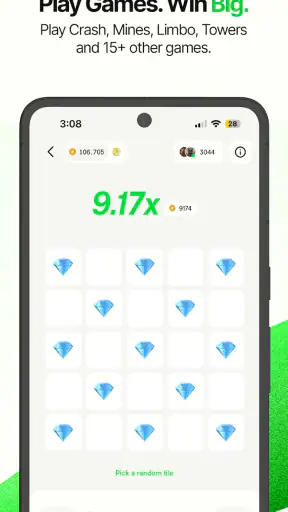
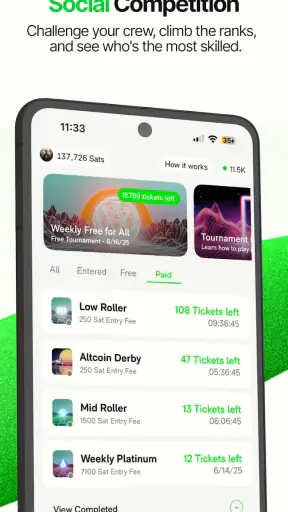
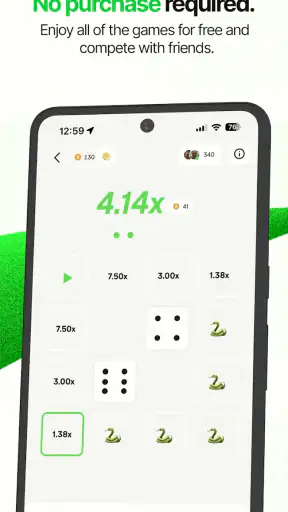
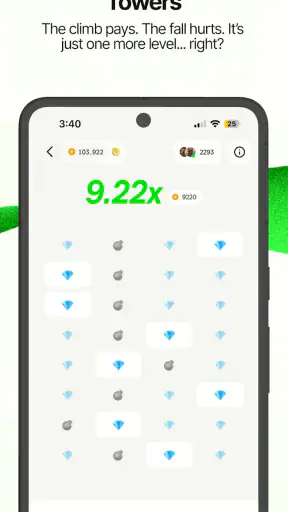
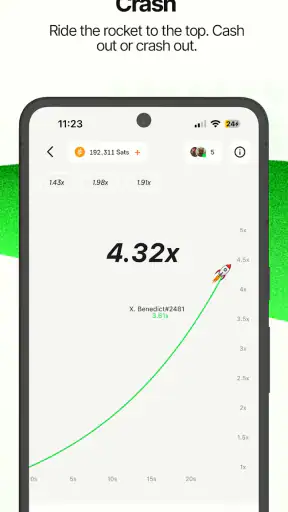
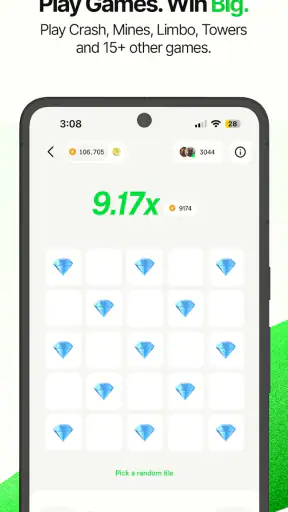
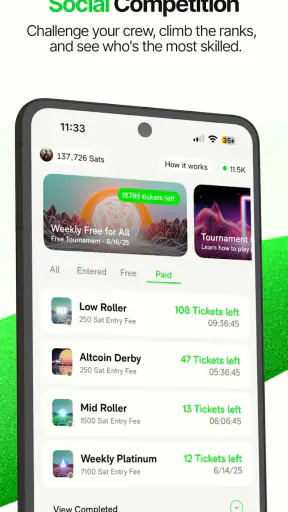
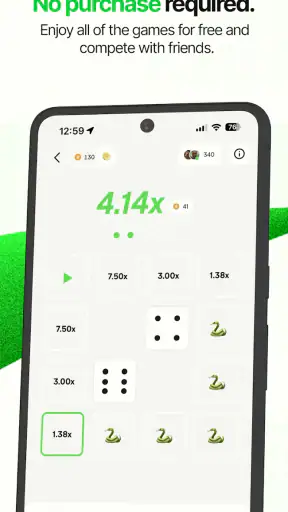
I approached Ember as a finance app with a very different personality from the usual budgeting, banking, or investing tools. Its store summary promises fast, fun, and thrilling games, while its category places it among finance apps. That combination is the first thing a potential user should understand: this is not the kind of app I would open to build a monthly budget or calmly compare savings accounts. It is designed around the idea of turning play into a route toward rewards, so the experience feels closer to casual gaming than traditional money management.
That unusual mix can be appealing if you enjoy short game sessions and like the possibility of receiving something in return for your attention. It can also be confusing if you expect a conventional financial dashboard. After spending time with it, my view is that Ember works best when treated as an entertainment app with a financial angle, not as a replacement for a bank, a serious investment platform, or a personal finance planner.
How I Would Decide Whether Ember Fits
The first decision is about your motivation. If you want a simple way to pass a few minutes while exploring a rewards-focused experience, the app has a clear appeal. If your goal is to control spending, monitor bills, or make carefully researched financial decisions, I would start elsewhere. The category label alone should not lead you to expect the tools normally associated with finance software.
I would also consider how comfortable you are with uncertainty. A game-based rewards model can feel exciting because it adds anticipation to ordinary play, but that same excitement can make it harder to keep a clear boundary between entertainment and money-related expectations. I recommend deciding in advance how much time and optional spending you are willing to devote. That small rule makes the experience easier to judge on its actual value rather than on the hope of a big outcome.
Ember is free to install, which lowers the barrier to trying it. Optional purchases range from less than a dollar to around one hundred dollars per item, so the important question is not simply whether downloading costs anything. The more useful question is whether you can enjoy the core experience without feeling pushed to spend. I would begin with a no-purchase trial and only reconsider after I understood the app’s rhythm, reward structure, and the amount of attention it demands.
The audience rating is Teen, another useful signal for families and younger users. I would still encourage parents to discuss in-app purchases before allowing regular use, especially because a game-like interface can make optional spending feel less serious than it is. A teenager who understands that entertainment purchases are real purchases is in a much better position to use the app responsibly.
The first session: what I paid attention to
During an initial session, I would not focus only on whether a game is entertaining. I would watch how quickly the app explains its rules, how clearly it separates play from rewards, and whether the path from an action to a result feels understandable. Those details matter more here than colorful presentation. A finance-related game needs to make the consequences of choices easy to follow.
I would also check how naturally the app fits into a short break. Ember’s strongest use case is likely a compact session while waiting for a train, taking a coffee break, or winding down at home. If you need to commit to long sessions to feel progress, the experience becomes less convenient than ordinary mobile games. If rewards require repeated attention, I would treat that time as part of the real cost.
One practical habit helped me keep the experience grounded: I separated “fun value” from “financial value.” First I asked whether I enjoyed the activity even without a reward. Then I considered whether the reward side justified the time or any optional purchase. This two-step test is more useful than judging the app by excitement alone, because excitement can be temporary while time and spending are measurable trade-offs.
Where the app feels different from ordinary finance tools
Traditional finance apps usually reward patience, organization, and repetition. You enter expenses, review balances, move money, or study charts. Ember takes a more playful route. Its appeal comes from interaction rather than from a quiet overview of your financial life. That makes it easier to open casually, but it also means it does not provide the same sense of control as a budgeting app.
I would not use it to answer questions such as “Where did my money go this month?” or “Can I afford this bill?” There is no reason to expect a game-oriented experience to replace those functions. Instead, I see it as a separate category: a casual rewards app for people who enjoy play, with finance-related expectations that need careful handling.
This distinction is important when comparing alternatives. A standard mobile game may offer a cleaner play experience if you only want entertainment. A budgeting tool is better if you want financial clarity. A conventional investment service is more appropriate for long-term decisions that require research, transparency, and deliberate risk management. Ember sits between those purposes, and its value depends on whether that middle ground is exactly what you want.
What Ember Does Well, and Where It Requires Care
Its biggest strength is lowering the effort needed to start
Ember has been available since January 2019, and its current version is 38.0. The app has reached over one million installs, with a 4.7 average from around thirty-seven thousand ratings. Those figures suggest that the concept has attracted a substantial audience and that many users find the overall experience appealing. I would not treat popularity as proof that it is right for everyone, but it does make the app feel established enough to deserve a fair trial.
The developer, Ember Fund Inc, has built an identity around making a finance-related experience feel more approachable. That matters for people who normally avoid financial apps because they seem dry or intimidating. The playful framing can make it easier to explore the app for the first time, especially when the alternative is ignoring finance-related products altogether.
Another strength is the low commitment at the download stage. Since the app is free, you can inspect the experience before deciding whether it belongs in your regular routine. I recommend using that freedom deliberately. Do not judge it after a few seconds, but do not assume that continued use is automatically worthwhile either. Give yourself a limited trial period, observe how often you return, and decide whether the app adds genuine enjoyment.
A useful everyday scenario
Imagine I am waiting for an appointment with ten minutes to spare. I could scroll through social media, open a conventional game, or use Ember for a short session. In that situation, the app has a clear advantage over a budgeting tool because it is built for immediate engagement rather than administration. If I enjoy the activity and remain comfortable with the reward mechanics, the session feels more purposeful than idle scrolling.
Now imagine a different evening. I am trying to reduce unnecessary spending and understand my monthly commitments. Ember would not be my choice. I would need a dedicated money-management tool that shows transactions and recurring costs in a structured way. The same app can be a reasonable companion for spare-time play and the wrong tool for financial planning. That is not a contradiction; it is the central trade-off.
Three habits that make the experience more useful
First, I would set a time boundary before opening it. Game-like rewards can encourage “one more round” thinking, and the value of a session changes if it quietly expands from a few minutes into a large part of the evening. A timer or a simple stopping rule keeps the entertainment side from taking over.
Second, I would keep optional purchases separate from ordinary spending. Do not add money while distracted, bored, or trying to recover from an unsatisfying result. If you choose to spend, make that decision outside the excitement of a session and regard the purchase as entertainment, not as a guaranteed route to a financial outcome.
Third, I would record what I actually receive rather than relying on memory. This is a small but useful discipline for any rewards-oriented app. It helps me compare the experience with alternatives based on real results and real time, rather than on a memorable moment that may not represent normal use.
Where the friction becomes noticeable
The main limitation is conceptual clarity. People who see the Finance label may expect a practical money tool, while the store summary points toward games. That mismatch can create the wrong expectations before the first session. I think the app is easier to understand when approached as a playful rewards experience, but users looking for serious financial management may feel that they installed the wrong kind of product.
Optional purchases are another point of friction. The range from $0.99 to $99.99 per item is wide enough that spending discipline matters. Free access is helpful, but it does not automatically mean the whole experience is cost-free. I would be especially cautious on a shared device or a family account, where an accidental purchase can become an unpleasant surprise.
There is also a psychological trade-off. Connecting games with financial rewards can make play feel more meaningful, but it can also make losses of time or money feel more personal. If you prefer games that are completely separate from financial concerns, a standard free-to-play title with no rewards expectation may be a better fit. If you already find chance-based or reward-driven systems stressful, I would skip Ember rather than hoping the feeling disappears.
Who should choose an alternative
I would point a careful budgeter toward a dedicated budgeting app. That alternative is better for categorizing spending, planning bills, and building a reliable picture of cash flow. Ember does not occupy that role, so switching to it would not solve a budgeting problem.
I would recommend a conventional finance or investment service to someone who wants detailed information before making long-term decisions. The playful format is not a substitute for research, account oversight, or a deliberate financial plan. Choosing Ember for those purposes would be like using a casual game as a spreadsheet: possible to open, but poorly matched to the job.
For someone who only wants games, the choice is more personal. Ember may be worthwhile if the financial angle adds interest without changing how you enjoy the session. If you dislike rewards mechanics or prefer a game judged purely by its gameplay, another title may offer a cleaner experience and fewer decisions about spending.
What switching really costs
Moving from a normal game to Ember is not technically difficult because the app is free to install, but the real switching cost is behavioral. You may need to learn a different reward rhythm, adjust your expectations, and decide how to handle optional purchases. I would not move all my leisure time to it immediately. I would keep my usual alternatives available and compare which one I choose naturally after the novelty fades.
Moving from a budgeting app is a more serious mismatch. Ember cannot replace the habits built around reviewing expenses and planning ahead. If you uninstall a practical finance tool in favor of a game-oriented app, you risk losing useful financial routines. I would use Ember alongside those tools, if at all, rather than treating it as a full replacement.
There is little reason to make an all-or-nothing decision. Try it during a defined period, avoid purchases at first, and ask three questions: Did I enjoy the play itself? Did the reward side remain understandable? Did the time spent feel reasonable? If the answers are consistently positive, Ember may deserve a place on your phone. If not, returning to a regular game or a practical finance app is the better decision.
My recommendation
I recommend Ember to adults and older teens who enjoy casual mobile games, understand that optional purchases involve real money, and want to explore a rewards-focused experience without confusing it with financial planning. Its free entry, established presence, and strong average rating make it easy to test, while its unusual finance-and-games combination gives it a distinct reason to exist.
I would not recommend it as a budgeting tool, an investment replacement, or a dependable way to improve personal finances. I would also avoid it if you are likely to spend impulsively, dislike reward uncertainty, or want every session to be judged only by gameplay. In those cases, a dedicated finance app or an ordinary game will serve you better.
My final advice is simple: install it with a clear purpose, begin without spending, and evaluate the experience by time as well as enjoyment. The best way to use Ember is as optional entertainment, not as a financial plan. With that boundary in place, it can be an interesting addition for the right person; without it, the playful presentation may blur the difference between having fun and making a sound money decision.
For me, that makes the app a selective recommendation rather than an automatic one. It wins when the goal is a short, engaging game session with a financial twist. It loses when the goal is control, predictability, or serious money management. Knowing which of those jobs you need the app to perform is the clearest way to decide whether Ember belongs on your Android or iOS device.


